03 / Project Management Certificate team capstone · Project simulation
Gilman Renovation & Build2Lease
Our Project Management Certificate team planned a building renovation alongside a supporting app concept. The work brought together schedules, budgets, risk, change control, and the needs of people using the proposed app.
University of Washington · Project Management Certificate
Project at a glance
- Project type
- Project Management Certificate team capstone · Project simulation
- My role
- Three-person team member; rotated through the project-manager role.
- Objective
- Plan a renovation and its supporting Build2Lease app concept.
- Key deliverables
- Management plan, WBS, budget and schedule materials, change controls, and product backlog.
- Tools / methods
- Integrated planning, user stories, story points, phased releases.
- Outcome / status
- Project Management Certificate simulation; no renovation or app launch.
The problem
The simulation required a coordinated plan for renovating a historic building and preparing it for tenants. A related app concept, Build2Lease, would help the project team share drawings, track changes, and keep schedule and budget information available.
My contribution
I worked as part of a three-person Project Management Certificate team and rotated through the project-manager role. Together, we developed the management plan and supporting controls.
The work
- Developed a coordinated plan covering scope, stakeholders, communication, procurement, quality, and risk.
- Built supporting work breakdown structures, budgets, and project-status materials.
- Documented change requests and their effects on cost, scope, and schedule.
- Planned Build2Lease through user stories, priorities, and phased releases.
How the solution took shape
Connect the building plan to stakeholder needs
Our three-person Project Management Certificate team planned the renovation and the supporting Build2Lease concept together. The product vision identified what construction leads, finance, vendors, marketing, and owners would need to see or update.
Break the project into manageable work
We developed the project management plan and work breakdown structure, supported by schedule, budget, risk, procurement, and communication documents. This connected the overall scope to the work that would need planning and control.
Turn app needs into user stories
The backlog linked each feature to a role and a reason for needing it. For example, construction leads needed current drawings so work could follow the latest revision, while vendors needed visibility into invoices and payment status.
Estimate effort and arrange releases
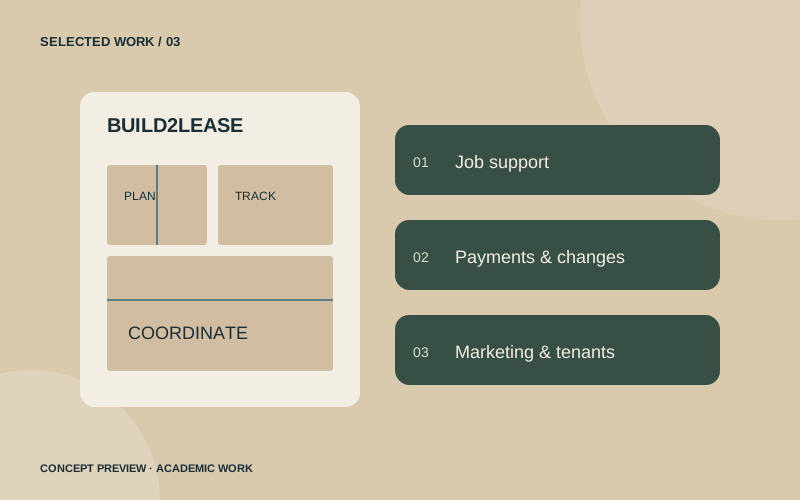
The team used t-shirt sizing and story points to estimate features, then placed them in a proposed 13-sprint schedule. The three phases moved from basic job support to payments and change control, then marketing and tenant features. The estimates were planning assumptions, not measured development velocity.
Plan how changes would be evaluated
Our change-control exercises documented a request, the reason for it, its effects on the plan, and possible alternatives before recording a decision. This connected changes to scope, cost, and schedule rather than treating each request in isolation.
Keep the planning pieces connected
We rotated the project-manager role and used handoff records and status materials to maintain continuity. The result was a coordinated set of team planning documents, rather than a completed renovation or a working app.
A closer look
Build2Lease: a phased feature roadmap
Basic job support
Drawings, schedules, and access to project information.
Payments & change control
Vendor payments, change tracking, and project dashboards.
Marketing & tenants
Virtual tours, marketing materials, and tenant features.
Actual project artifacts
Samples from the project
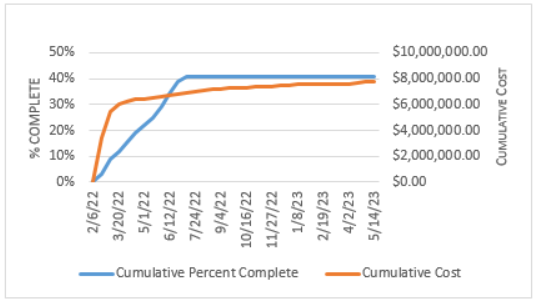
Original chart from the Project Management Certificate team’s status dashboard, showing cumulative progress and cost in the classroom scenario. These are simulated figures, not completed construction results.
View full sizeAn example from the work
Build2Lease release planning
The proposed releases started with drawings, schedules, and basic job support. Later phases added payments and change control, followed by marketing and tenant features. The backlog connected features to the people who needed them.
The project in numbers
Planning assumption
13 two-week sprintsProposed Build2Lease release schedule
The team backlog arranged app features across three phases. The sprint count and duration describe the plan, not an app launch or measured team velocity.
What came out of it
The capstone produced an integrated set of planning and control documents. Build2Lease added a product perspective by connecting different users' needs to a prioritized backlog and a proposed release sequence.
This project shows how I connect the overall plan with day-to-day controls and translate stakeholder needs into a product backlog.
Project scope and limits
Project Management Certificate simulation, not a completed renovation or launched application. The documents show planning work rather than achieved financial or operational results.